How Sleep, Stress, and Movement Shape Your Body Over Time
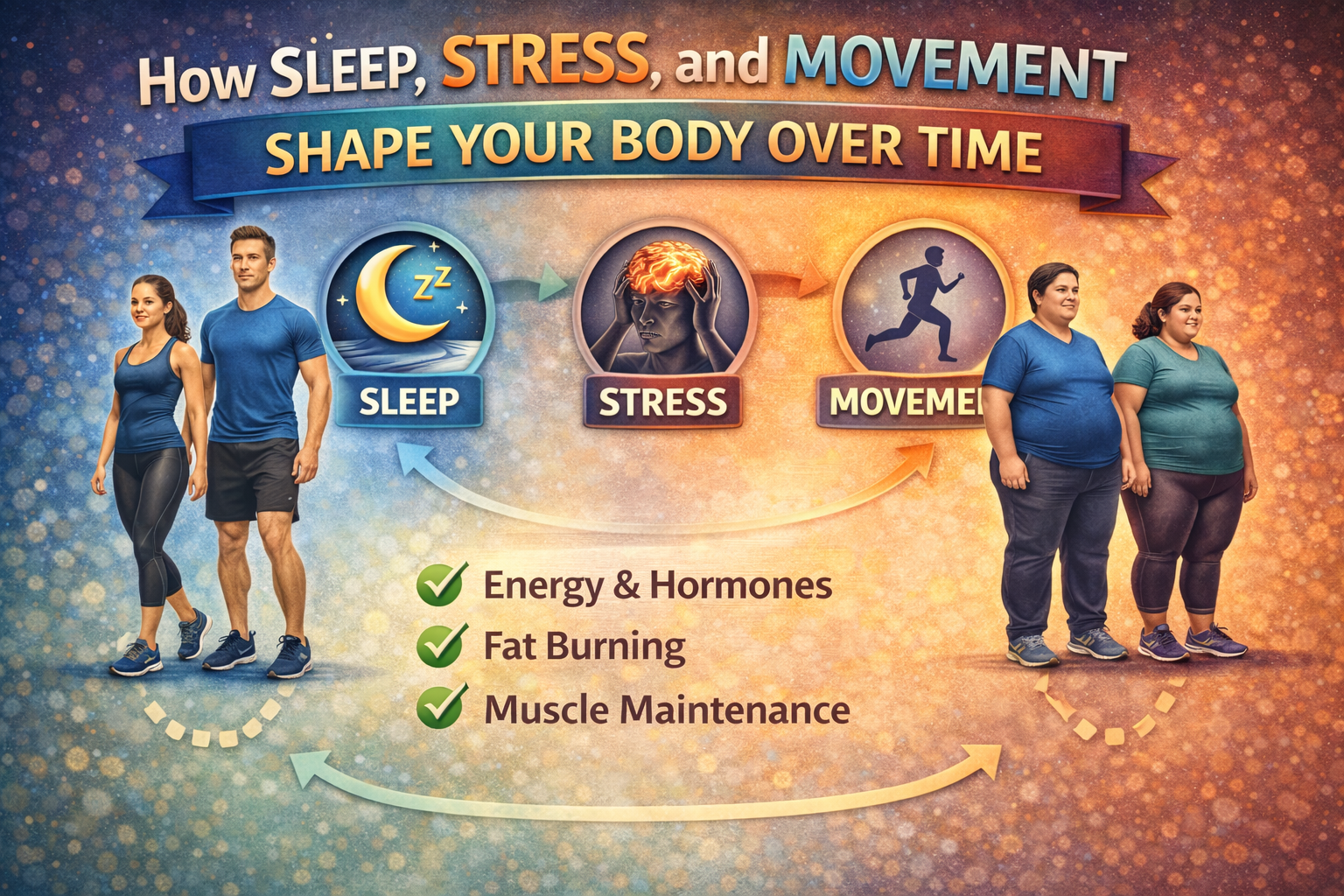
Weight management is often framed as a food-only equation, but the human body responds to much more than calorie intake. Sleep quality, stress levels, and physical activity patterns significantly influence how energy is used and stored.
Sleep plays a foundational role. Inadequate sleep may disrupt hormones that regulate appetite and fullness, leading to increased cravings and reduced energy for movement. Consistent sleep schedules, reduced screen exposure before bed, and a calm sleep environment can support recovery and metabolic balance.
Stress is another critical factor. When stress becomes chronic, the body shifts into a protective mode. This can affect appetite, food choices, and daily energy levels. Stress-management techniques such as walking outdoors, journaling, breathing exercises, or structured relaxation practices can positively influence overall well-being.
Physical activity does not need to be extreme to be effective. Regular moderate movement—such as brisk walking, resistance training, or cycling—supports muscle maintenance and cardiovascular health. Muscle tissue, in particular, contributes to long-term metabolic stability. Consistency again matters more than intensity.
Non-exercise activity is equally important. Standing more often, taking stairs, and short movement breaks during sedentary workdays can meaningfully increase total daily energy expenditure over time.
When sleep, stress regulation, and movement are aligned, nutrition efforts become more effective. These foundational habits reinforce one another, creating a stable environment in which healthy body composition changes can occur gradually.
Sustainable well-being grows from systems, not shortcuts. Small daily actions compound quietly, shaping long-term results without extreme measures.
