Building Balanced Plates Without Restrictive Diet Rules
Nutrition advice often swings between extremes—cut carbs, avoid fats, eliminate entire food groups. Yet balanced eating rarely requires rigid rules. Instead, it benefits from structure combined with flexibility.
A practical starting point is understanding macronutrients. Carbohydrates provide accessible energy, protein supports muscle maintenance and satiety, and fats assist with hormone regulation and nutrient absorption. Each plays a role. Removing one entirely can make meals less satisfying and harder to maintain over time.
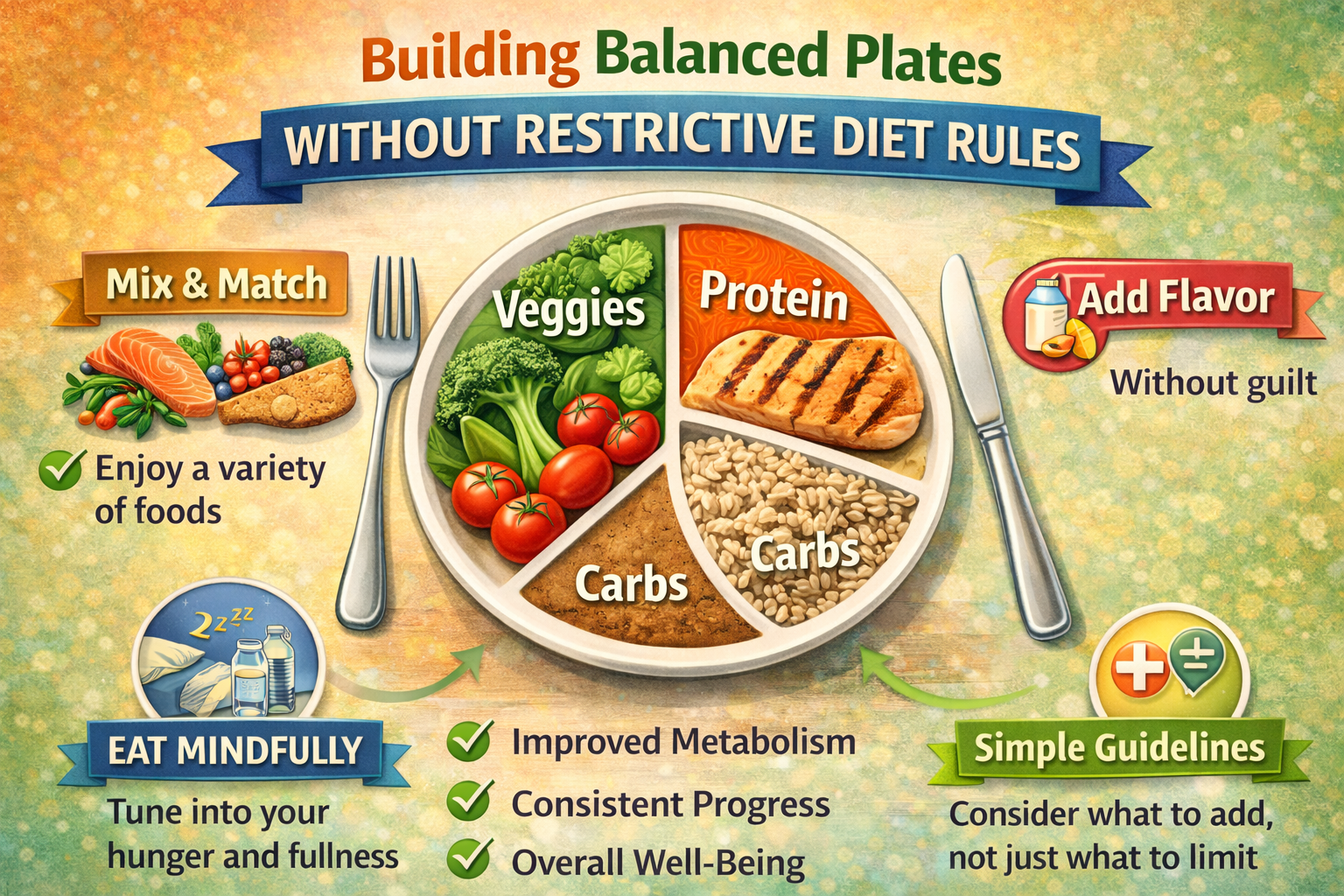
Creating a balanced plate is simpler than it sounds. Aim to include a source of protein, fiber-rich carbohydrates such as vegetables or whole grains, and healthy fats. This combination helps stabilize energy levels and may reduce excessive snacking driven by rapid blood sugar fluctuations.
Mindful eating also matters. Eating slowly, noticing hunger and fullness cues, and minimizing distractions can improve awareness of portion sizes. Many people discover that they feel satisfied with less food when they pay attention to the experience of eating.
Rather than labeling foods as “good” or “bad,” consider frequency and context. Occasional treats can fit within a balanced pattern when most meals are nutrient-dense and varied. Sustainability increases when no food is entirely forbidden.
Hydration is another overlooked factor. Mild dehydration can sometimes be mistaken for hunger. Drinking water consistently throughout the day supports general well-being and may help regulate appetite naturally.
Balanced nutrition is not about strict control. It is about informed choices, moderation, and building meals that nourish both body and routine.
